
Misaligned or crooked teeth are not just a cosmetic problem. The alignment of your teeth also affects function and overall oral hygiene. There is a high risk of plaque accumulation with misaligned teeth.
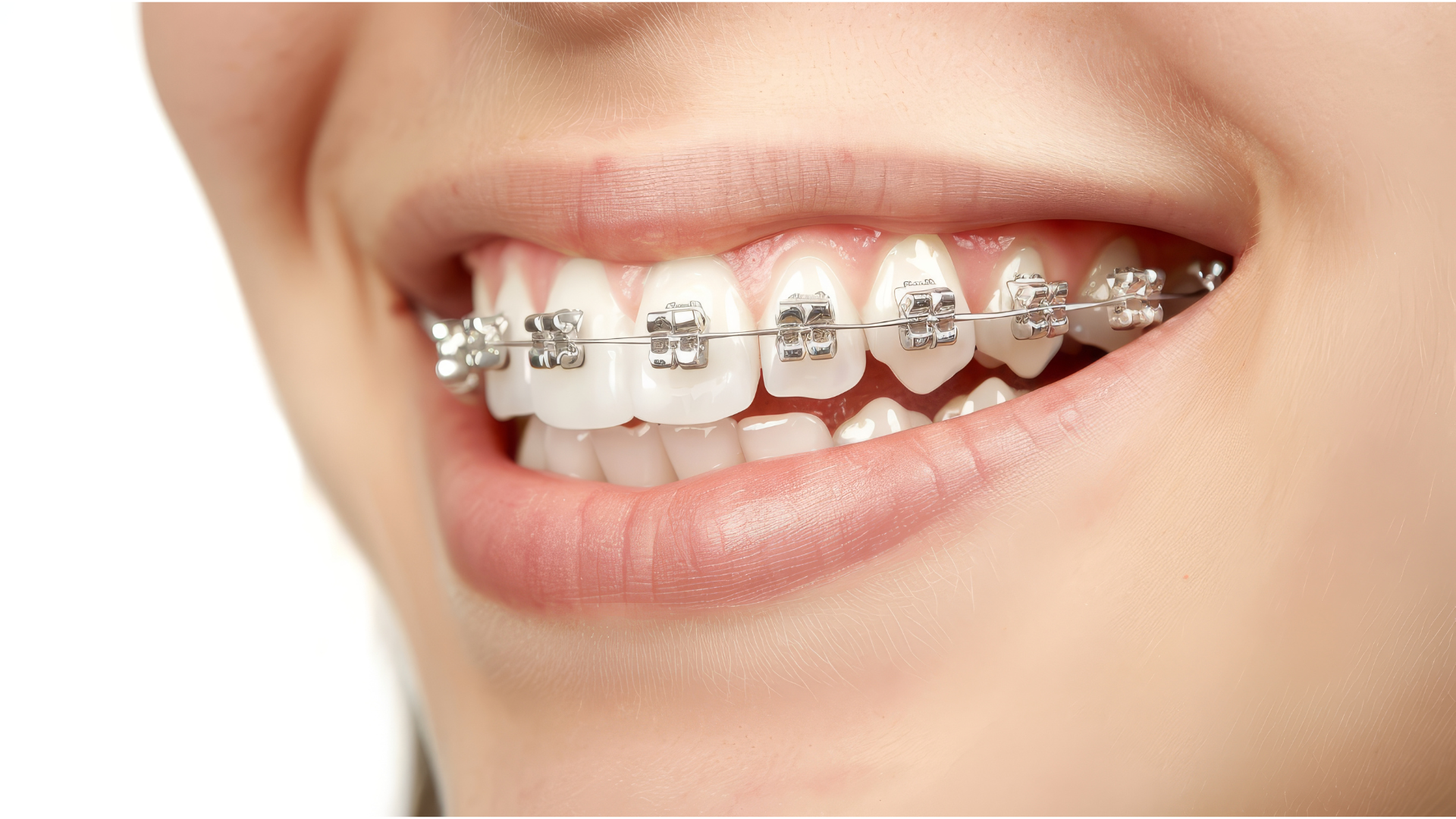

Plaque accumulation can lead to gum problems and eventually affect the tooth mobility. Crooked teeth are difficult to clean, increasing the risk of plaque and tartar buildup. Misaligned teeth can also alter the bite, leading to functional issues such as reduced chewing efficiency and, in some cases, jaw joint pain. It is therefore important to have your teeth properly aligned on time to avoid future complications.
There are various ways to correct misalignment, and below we discuss the most traditional method: dental braces.
Dental braces are the most traditional method for correcting misaligned teeth and are effective in addressing a wide range of misalignments. There are various kinds of braces available, namely:
The most common and traditional type of braces. They differ in material and placement on the teeth. However, the mechanism of action remains the same for all kinds of braces.
They differ in material and placement on the teeth. However, the mechanism of action remains the same for all kinds of braces.
They differ in material and placement on the teeth. However, the mechanism of action remains the same for all kinds of braces.
It all depends on the current dental status and the requirements of your case. It is therefore important to complete her dental evaluation to plan more effectively.
Dental braces consist of brackets attached to the teeth, with wires running through them. Adjusting the wires applies pressure to the teeth.
The pressure is mild and helps induce molecular-level changes in the bone surrounding the teeth. These changes in the bone will allow the teeth to move. It helps move crooked teeth to their desired position.
The consultation process helps clarify any questions you may have. It is important to discuss your expectations before the treatment. Our team will help you address any questions before you start the procedure.
The clinical examination helps us formulate a customized treatment plan. It is important to obtain clinical and radiological examinations to accurately diagnose the condition.
Clinical examination assesses the current dental status, and radiological examination evaluates jawbone health.
Based on the diagnosis, a customized treatment plan is made. The treatment duration is also estimated based on the diagnosis. Each case is unique and has its own timeline. It is therefore important to have a comprehensive dental evaluation before proceeding.
Treatment begins with bracket placement. Before that, teeth are professionally cleaned with an ultrasonic scaler. This helps remove plaque and tartar from the teeth.
Once the teeth are thoroughly cleaned, the brackets are bonded to the teeth using a special dental adhesive.
The wire system passes through the slots in the bracket. The wires are easily secured with elastics.
Based on your case requirements, you will be called for regular follow-ups to adjust the wires and elastic. This is how braces work: they apply pressure to the teeth, helping them move into the desired position.
Once the teeth are moved into the desired position, there is a strong tendency for relapse. It is important to proceed with retainer treatment after dental braces are removed. It helps prevent relapse by allowing new bone to form around the teeth in their new location.
It is challenging to keep your teeth clean while going through dental braces treatment. Specialized orthodontic brushes are available to improve cleaning. It is also recommended to have your professional cleaning more frequently while you are undergoing dental braces treatment. This helps prevent plaque buildup and helps you avoid gum problems.
Once the teeth are stabilized in their new position, you can opt out of dental retainer therapy. Radiological assessment confirms that new bone is forming around the teeth.
Once the teeth are moved into the desired position, there is a strong tendency for relapse. It is important to proceed with retainer treatment after dental braces are removed. It helps prevent relapse by allowing new bone to form around the teeth in their new location.
Once the teeth are stabilized in their new position, you can opt out of dental retainer therapy. Radiological assessment confirms that new bone is forming around the teeth.
The total time duration for the dental braces treatment depends on:
It is challenging to keep your teeth clean while going through dental braces treatment. Specialized orthodontic brushes are available to improve cleaning. It is also recommended to have your professional cleaning more frequently while you are undergoing dental braces treatment. This helps prevent plaque buildup and helps you avoid gum problems.
Yes, anyone with a healthy set of adult teeth can get braces treatment. It is important to rule out decay and gum problems. If there are any early signs of decay or gum disease, it is suggested to address them first.
If you have misaligned teeth or notice gaps between your teeth, it is important to schedule a consultation with our experts to learn more. We’ll help you with a customized treatment plan based on your needs. Early action will save you time and money. Book your appointment now for Metal Braces in Greater Kailash 1 Delhi
If you have misaligned teeth or notice gaps between your teeth, it is important to schedule a consultation with our experts to learn more. We’ll help you with a customized treatment plan based on your needs. Early action will save you time and money. Book your appointment now for Metal Braces in Greater Kailash 1 Delhi
Fill in your details and we will get back to you shortly.
If you have misaligned teeth or notice gaps between your teeth, it is important to schedule a consultation with our experts to learn more. We’ll help you with a customized treatment plan based on your needs. Early action will save you time and money.